
The Horizon
$372 billion a year. That is what the rest of the world pays the United States, net, for things that cannot be loaded into a container.
It is the services surplus running at August's rate: software, finance, engineering, schooling, travel and the right to use American patents.
The goods deficit beside it moved $12.8 billion in a single month. The services line moved by less than a tenth of a billion, and it is the one attached to what your large-cap holdings actually sell.
One of those two numbers made every headline yesterday. The other is the one that compounds.
The Event
The August international trade report was published by the Census Bureau and the Bureau of Economic Analysis on Tuesday, October 6, at 8:30 a.m. Eastern. The goods and services deficit widened to $105.6 billion from a revised $92.8 billion in July.
Exports rose $4.5 billion to $315.2 billion, a gain of 1.4%. Imports rose $17.2 billion to $420.8 billion, a gain of 4.3%, three times the pace.
Goods accounted for the entire move, with that deficit widening $12.8 billion to $136.6 billion. The services surplus held at $31.0 billion, changed by less than a tenth of a billion.
The eight months to August tell a different story from the month itself. Against the same period of 2025 the deficit is down $138.2 billion, or 19.9%, with exports up 11.8% and imports up 4.4%.
The largest bilateral goods deficits were with Mexico at $27.7 billion, Vietnam at $24.0 billion and Taiwan at $18.3 billion. The Netherlands produced the largest surplus at $7.7 billion.
Sponsored
Musk says UBI is coming. I say it's already here.
In his most recent interview with The Economist, Elon Musk said that because of AI "money will be irrelevant by the year 2036."
I can see that happening too.
AI is already displacing millions of jobs.
One report says 40% of all jobs could be automated within the next decade.
When that happens, the government will have no choice but to pay people some sort of Universal Basic Income.
But this could take 20 years to materialize.
So while Musk tweets and Congress holds hearings, what are you supposed to do? Wait?
I don't think so.
But you don't have to. Universal Income already exists.
It's not funded by robots or AI. It's funded by America's oil and gas infrastructure, and it pays 10% a year, 42 times a year, to everyone who holds units.
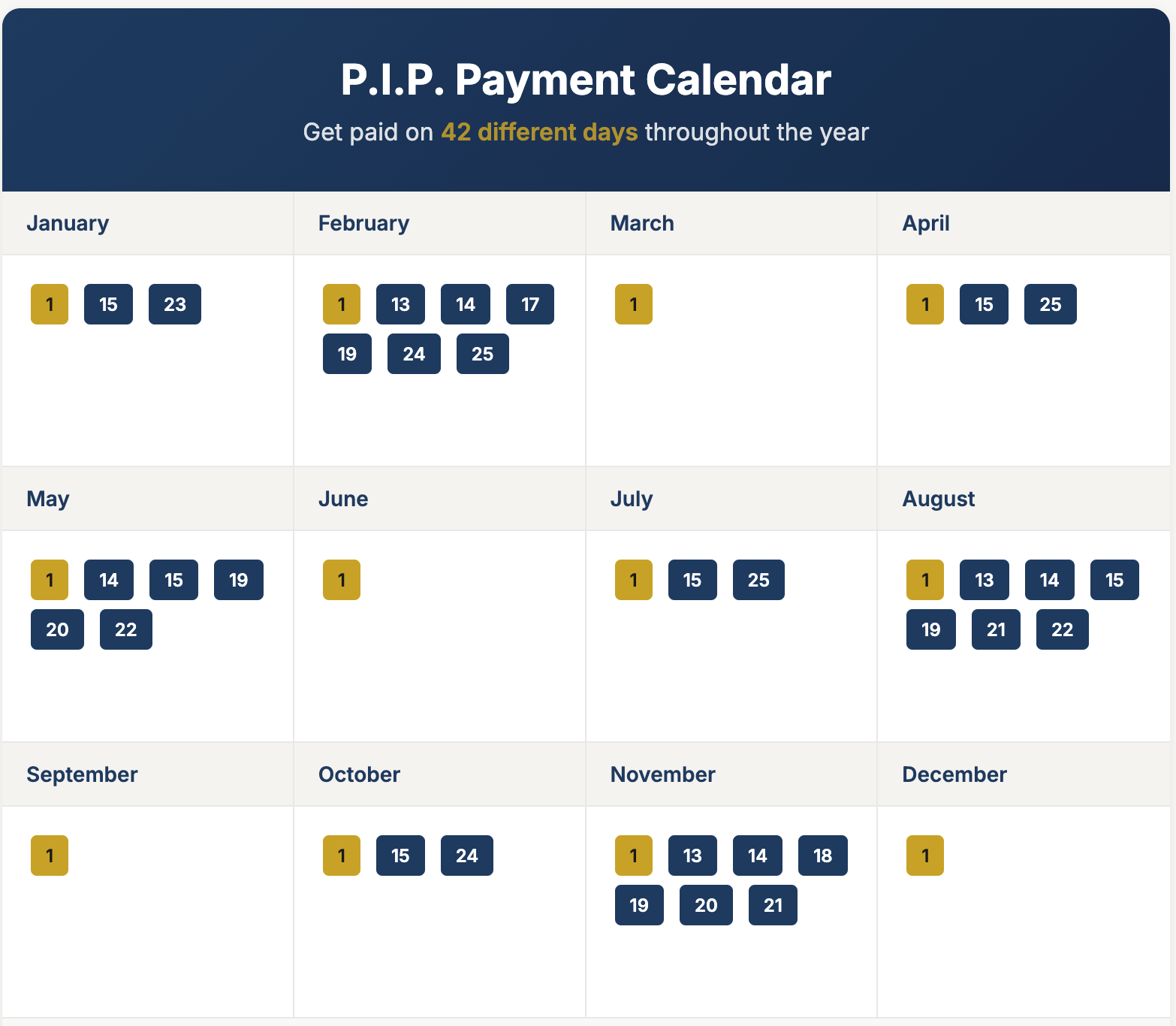
It's called the Patriot Income Plan, or P.I.P. for short.
And this year it's expected to pay a record $53 billion in distributions.
Think of it as your own personal sovereign wealth fund, backed by the biggest energy producer on planet earth.
Enroll in P.I.P. before the next payout
P.S. Since 2020, the average partnership in P.I.P. has produced 20% avg. annual gains. That's in addition to the 10% yield. One investor already collects $4,800 a month. Another hasn't worked in years. Show me something better. I'll wait.
[Enroll in P.I.P. →]
The Path
A trade deficit is not money leaving the country. It is an exchange recorded twice, and the second entry is the one that reaches a portfolio.
Dollars paid out for imports come back as purchases of American assets. A $105.6 billion monthly gap is matched, by accounting identity, with an inflow of roughly the same size into Treasuries, equities and property.
That inflow sits underneath the price of nearly everything a builder owns. It is also why a widening deficit and rising asset prices tend to arrive together rather than in opposition, which is the reverse of how the headline reads.
The second reading is in which half of the balance moved. Goods swung $12.8 billion in a month while services did not move at all.
Goods flows follow inventories, oil cargoes and shipping schedules, and they reverse inside a quarter. Services flows follow contracts, licenses and enrollments, and they do not.
At $31.0 billion a month the services surplus is the structural half of the position. Annualized it runs near $372 billion, which is the closest thing in this data to a measure of what America sells that cannot be stopped at a port.
That line maps onto a builder's equity more directly than the headline does. Software licenses, financial services, engineering and royalties are revenue for the largest American companies, and this release counts them before any earnings call does.
The third reading is the one the month obscures. A deficit 19.9% smaller than last year, on exports up 11.8%, is a structural improvement that one bad month does not undo.
The bilateral lines carry the weight outside the brokerage account. Mexico, Vietnam and Taiwan are the three largest goods deficits, which is another way of naming where a small manufacturer's inputs are actually made.
A builder sourcing from any of those three is reading a supply map rather than a scorecard. A deficit with a country measures dependence before it measures anything else.
The Watch
The September trade report is scheduled for Wednesday, November 4, at 8:30 a.m. Eastern. Read the services line first, because it is the half that does not bounce back.
The quarterly current account statement is where the financing side of that identity gets reported rather than implied. The third-quarter version arrives later this quarter.
Revisions in this series are large. July was restated to a $92.8 billion deficit in yesterday's release, and August will be restated in the next one and again in the annual revision.
The month widened and the year narrowed, and only one of those two is long enough to matter to a plan measured in decades.