
The Horizon
Monday, November 16: a new line settles on a brokerage screen, a Treasury bond paying 5 3/8% every May 15 and November 15 until 2056. If you bid at auction, the price shows as $99.028979 per $100, and thirty years of coupons start counting that morning.
That coupon was fixed on Thursday, November 12, at a 5.441% high yield. One day later the Bureau of Labor Statistics reported producer prices up 6.5% over twelve months, the largest rise since November 2022.
Long money was priced in the same week the cost pipeline printed its hottest reading in nearly four years. That pairing is the through-line of the week, and it reaches every fixed-rate dollar on the path.
The Event
On November 13 the BLS released the Producer Price Index for October 2026, release USDL-26-1687. Final demand prices rose 0.3% in October, after 1.4% in September and 0.4% in August, seasonally adjusted.
The unadjusted 12-month gain reached 6.5%. Final demand less foods, energy and trade services rose 0.5% for the month and 4.9% over twelve months.
Goods carried October, up 0.5%, with food up 1.3% and energy down 0.1%. Over twelve months, final demand goods rose 10.2%, and processed goods for intermediate demand rose 14.6%.
Services rose 0.2% for a fifth straight month, led by a 2.0% jump in transportation and warehousing. Trade services margins fell 0.2%.
The same week, Treasury closed its November refunding. The 10-year note, CUSIP 91282CRX1, sold $42 billion at 5.020% on November 10, while the 30-year bond, CUSIP 912810UY2, sold $25 billion at 5.441% with a 2.36 bid-to-cover.
Sponsored
Musk says UBI is coming. I say it's already here.
In his most recent interview with The Economist, Elon Musk said that because of AI "money will be irrelevant by the year 2036."
I can see that happening too.
AI is already displacing millions of jobs.
One report says 40% of all jobs could be automated within the next decade.
When that happens, the government will have no choice but to pay people some sort of Universal Basic Income.
But this could take 20 years to materialize
So while Musk tweets and Congress holds hearings, what are you supposed to do? Wait?
I don't think so.
But you don't have to. Universal Income already exists.
It's not funded by robots or AI. It's funded by America's oil and gas infrastructure, and it pays 10% a year, 42 times a year, to everyone who holds units.
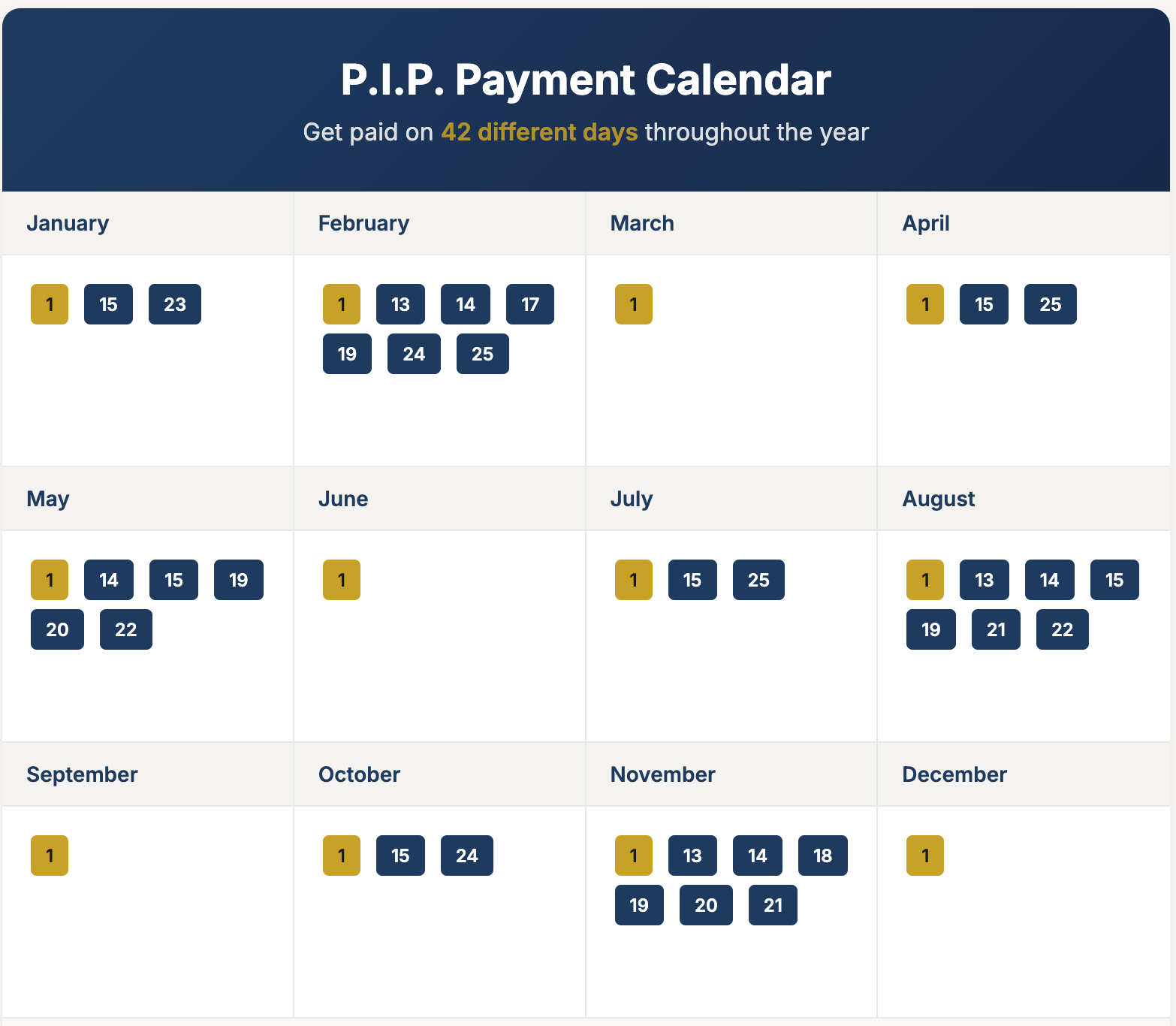
It's called the Patriot Income Plan, or P.I.P. for short.
And this year it's expected to pay a record $53 billion in distributions.
Think of it as your own personal sovereign wealth fund, backed by the biggest energy producer on planet earth.
| Enroll in P.I.P. before the next payout |
P.S. Since 2020, the average partnership in P.I.P. has produced 20% avg. annual gains. That's in addition to the 10% yield. One investor already collects $4,800 a month. Another hasn't worked in years. Show me something better. I'll wait.
[Enroll in P.I.P. →]
The Path
Fixed coupons carry the first consequence. A 5% coupon through November 15, 2036 holds its nominal value, but its purchasing power depends on whether producer costs pass into consumer prices over the decade.
Producer costs reach consumer prices with a lag, when they reach them at all. A bond priced before that pass-through leaves the whole risk with the lender.
The less obvious point sits inside the inflation hedge itself. Treasury Inflation-Protected Securities adjust principal to CPI-U, the consumer index, not to producer prices.
A TIPS holder therefore gains nothing from the 6.5% reading on its own. The adjustment arrives only if the pipeline drains into consumer prices.
The second consequence falls on the operating business. For an owner whose firm buys materials, the 14.6% annual rise in processed intermediate goods is the figure that matters, and truck freight rose 3.9% in October alone.
Margins absorb those costs unless prices rise with them. A business valued on a multiple of earnings loses value with every point of margin given up, and that reaches the horizon through the eventual sale price.
The third consequence sits in the brokerage account. The 0.2% drop in trade services measures margins, not prices: retailers and wholesalers kept less spread in October while the goods they sell cost more.
Equity positions in retail and distribution own that squeeze directly. Holiday-quarter earnings guidance is where it surfaces first.
The fourth consequence concerns cash. Treasury also sold a 17-week bill on November 12 at a 4.344% investment yield, and short paper rolled every four months resets to whatever the market charges.
That reset is the trade-off against the long bond's fixed 5 3/8%: the bill reprices three times a year, the bond never does. Before Tuesday's retail print, the map worth drawing is each fixed-rate holding by maturity, account type and share of the path, since Treasury interest escapes state tax but not federal tax.
The Watch
Tuesday, November 17, 8:30 a.m. ET: the Census Bureau's Advance Monthly Sales for Retail and Food Services for October, per its 2026 economic indicator schedule. Sales rising alongside producer prices would show pass-through landing on demand able to absorb it.
Wednesday, November 18, 2:00 p.m. ET: minutes of the October 27-28 FOMC meeting, per the Federal Reserve's November calendar. Any discussion of producer costs feeding consumer inflation bears directly on the long coupons sold this week.
The BLS calendar places the October import and export price indexes on Tuesday, November 17 at 8:30 a.m. ET and State Employment and Unemployment for October on Friday, November 20 at 10:00 a.m. ET. Its next Producer Price Index, for November, is set for Tuesday, December 15, at 8:30 a.m. ET, and a 12-month rate above 6.5% would mark October as a waypoint rather than a peak.
The 5 3/8% coupon is now fixed through 2056, and the gap between producer and consumer prices is where a builder's attention earns the most before December.