
The Horizon
New homes sold at an annual rate of 684,000 in August, and the median one went for 5.8% less than it would have a year earlier. That is a brick.
It is a brick with a date stamped on it. The houses being discounted this autumn were financed and framed years ago, and the ones meant to replace them are not being finished.
Completions in August ran 27.1% below August 2025. A soft market now and a thin pipeline behind it are one fact read from two ends of a decade.
Real assets sit on a twenty-year clock rather than a listing cycle. What you hold in 2046 is priced in part by how many houses get finished between now and 2029.
The Event
The Census Bureau and the Department of Housing and Urban Development released August new residential sales on Thursday, September 24, at 10:00 a.m. Eastern. Sales ran at a seasonally adjusted annual rate of 684,000 against a consensus near 615,000.
That is 6.4% above a July rate restated at 643,000 and 2.0% below the 698,000 of August 2025. The margins of error on those two changes are 19.5 and 15.7 percentage points.
The median sales price was $393,700, down 5.8% over the year. The average was $478,700, down 8.8%.
There were 483,000 new houses listed for sale at the end of the month, unchanged from July. At August's pace that is 8.5 months of supply, down from 9.0.
Of those 483,000, only 113,000 were standing finished. Another 256,000 were under construction and 114,000 had not been started.
Sponsored
Musk says UBI is coming. I say it's already here.
In his most recent interview with The Economist, Elon Musk said that because of AI "money will be irrelevant by the year 2036."
I can see that happening too.
AI is already displacing millions of jobs.
One report says 40% of all jobs could be automated within the next decade.
When that happens, the government will have no choice but to pay people some sort of Universal Basic Income.
But this could take 20 years to materialize.
So while Musk tweets and Congress holds hearings, what are you supposed to do? Wait?
I don't think so.
But you don't have to. Universal Income already exists.
It's not funded by robots or AI. It's funded by America's oil and gas infrastructure, and it pays 10% a year, 42 times a year, to everyone who holds units.
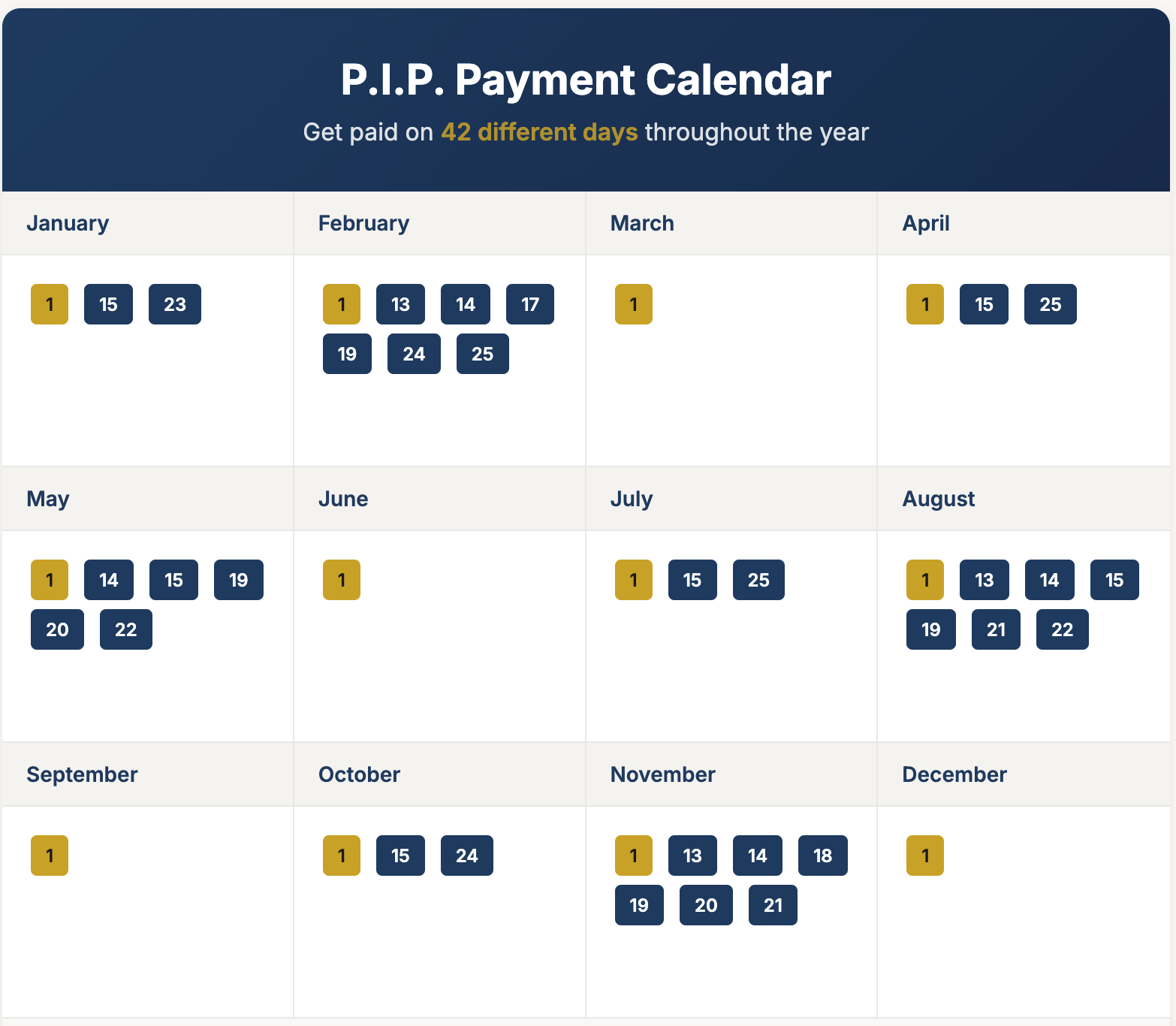
It's called the Patriot Income Plan, or P.I.P. for short.
And this year it's expected to pay a record $53 billion in distributions.
Think of it as your own personal sovereign wealth fund, backed by the biggest energy producer on planet earth.
Enroll in P.I.P. before the next payout
P.S. Since 2020, the average partnership in P.I.P. has produced 20% avg. annual gains. That's in addition to the 10% yield. One investor already collects $4,800 a month. Another hasn't worked in years. Show me something better. I'll wait.
[Enroll in P.I.P. →]
The Path
Eight and a half months of supply reads as a buyer's market. Four to six months is the range usually called normal.
The composition is where it stops reading that way. Nearly a quarter of the listed inventory is houses that do not exist yet, and only 113,000 of the 483,000 are finished and standing.
A house that has not been started is an option rather than a unit. The builder holds the permit and decides later, so the shelf gets restocked or left empty depending on what mortgage rates and order books look like over the next twelve months.
The Census construction release of September 17 says what the last twelve months looked like. Completions ran at 1,128,000 in August against 1,548,000 a year earlier, a decline of 27.1% with a margin of error of 8.9 points, and single-family completions alone were down 22.9%.
That fall is large enough to be measured. The month's 6.4% rise in sales, carrying an error band of 19.5 points, is not.
So the glut and the shortage are one series read at two dates. Inventory is being cleared now out of a pipeline delivering a quarter fewer finished houses than it delivered last year.
The price lines say something more specific than the headline does. The median fell 5.8% over the year while the average fell 8.8%.
An average falling faster than a median puts the discount at the expensive end of the market. For a builder whose balance sheet carries a larger house or a rental, replacement cost is moving down faster than the median implies.
The consequence outside the brokerage account lands on rent. A house that is never completed becomes neither an owned home nor a rented one, so completions down 27.1% remove units from both tenures at once.
Rent is the price of the units that exist. The ones that will set it in 2028 and 2029 are the ones not being finished in 2026.
The Watch
The Census Bureau publishes September residential construction on October 20 at 8:30 a.m. Eastern. The completions line is the one to read first, because it is the figure with the narrow error band.
September new home sales follow on October 27 at 10:00 a.m. The number worth tracking there is not the monthly change but the count of listed houses that have not been started.
Both releases restate the two prior months. July has already been revised up from 607,000 to 643,000, which makes August's monthly gain smaller than it would otherwise have read.
The market for finished houses is soft while the supply of them shrinks, and those two October dates will show which of the two is moving faster.