
The Horizon
A mortgage note signed this week carries its rate until 2056. A borrower picking fifteen years instead now pays exactly what the thirty-year contract cost last September.
Both averages rose again on Thursday morning. The government bond that ordinarily sets them ended the week one basis point below where it started.
Nothing was announced and nothing was voted on. A weekly survey printed two numbers that had pulled away from the benchmark underneath them.
The Event
Freddie Mac published its Primary Mortgage Market Survey on Thursday, September 17. The 30-year fixed-rate mortgage averaged 6.95 percent, against 6.76 percent a week earlier.
The 15-year fixed averaged 6.26 percent, up from 6.09 percent. A year ago the same two lines read 6.26 percent and 5.41 percent.
This week's 15-year figure is therefore identical to the 30-year figure of twelve months ago. One year moved the shorter contract onto the longer contract's old price.
Thursday's increase was the fourth in a row. The survey read 6.65 percent on August 20, then 6.66, 6.71 and 6.76 percent, so a single week added more than the previous three combined.
Sam Khater, Freddie Mac's chief economist, said only that the 30-year fixed-rate mortgage "continues to fluctuate as markets assess economic data." The release offered nothing further by way of explanation.
Treasury's daily par yield curve shows the 10-year at 4.95 percent on September 10 and 4.94 percent on September 17. The 30-year Treasury fell across the same stretch, from 5.37 percent to 5.29 percent.
Sponsored
Musk says UBI is coming. I say it's already here.
In his most recent interview with The Economist, Elon Musk said that because of AI "money will be irrelevant by the year 2036."
I can see that happening too.
AI is already displacing millions of jobs.
One report says 40% of all jobs could be automated within the next decade.
When that happens, the government will have no choice but to pay people some sort of Universal Basic Income.
But this could take 20 years to materialize
So while Musk tweets and Congress holds hearings, what are you supposed to do? Wait?
I don't think so.
But you don't have to. Universal Income already exists.
It's not funded by robots or AI. It's funded by America's oil and gas infrastructure, and it pays 10% a year, 42 times a year, to everyone who holds units.
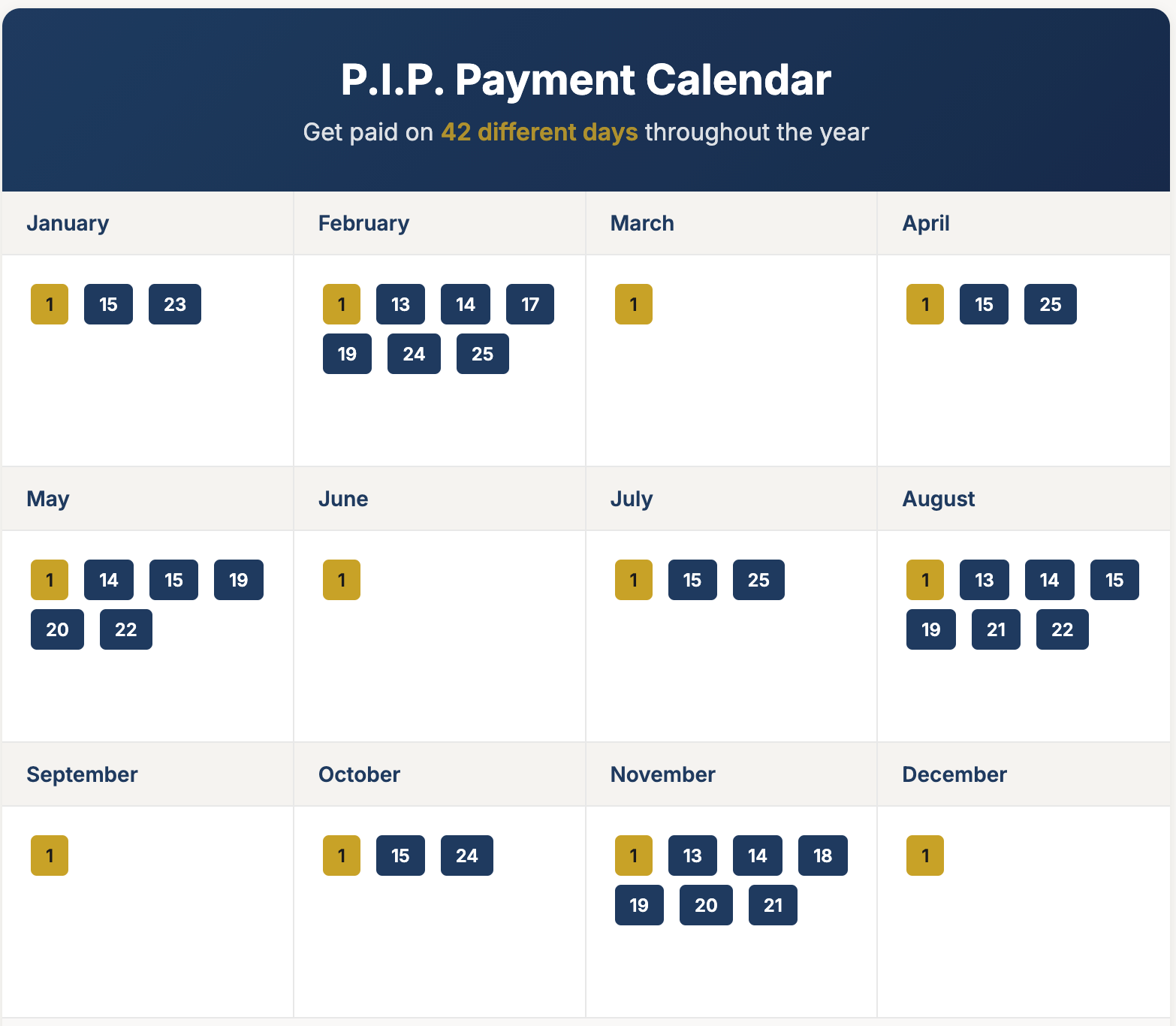
It's called the Patriot Income Plan, or P.I.P. for short.
And this year it's expected to pay a record $53 billion in distributions.
Think of it as your own personal sovereign wealth fund, backed by the biggest energy producer on planet earth.
Enroll in P.I.P. before the next payout
P.S. Since 2020, the average partnership in P.I.P. has produced 20% avg. annual gains. That's in addition to the 10% yield. One investor already collects $4,800 a month. Another hasn't worked in years. Show me something better. I'll wait. [Enroll in P.I.P. →]
The Path
Take the distance between the mortgage average and the 10-year Treasury. It stood at 181 basis points on September 10 and at 201 basis points on September 17.
Twenty basis points of the week's mortgage move therefore came from somewhere other than the government's cost of borrowing. The benchmark supplied none of it.
That distance is the price of everything a Treasury bond does not carry. A lender is paid for the borrower's right to repay early, for administering the loan across decades, and for warehousing it until an investor takes it.
None of those three is settled at a meeting. Each is set by whoever is willing to hold the paper, which is how the gap widens in a week when no official decision touches it.
The new average reaches nobody who has already signed. Every fixed mortgage written in an earlier year keeps its own coupon, so the whole of Thursday's increase falls on transactions that have not happened yet.
The consequence of that lands furthest from housing. A household holding an older and cheaper note replaces it at 6.95 percent on any move, which makes the survey average the standing price of changing address.
That cost is paid in the labour market rather than the property market. It shows up as an offer declined in another city, and no housing statistic ever records it.
A second consequence sits between the two contracts rather than inside either one. The 15-year sat 85 basis points under the 30-year a year ago and sits 69 basis points under it now.
The reward for agreeing to repay in half the time is therefore sixteen basis points smaller than it was last September. Both prices climbed, and the discount for the shorter promise shrank while they did.
Measured against the government's longest borrowing the separation is wider still. The 30-year Treasury fell eight basis points across the survey week while the mortgage average rose nineteen.
The Watch
The four figures below are separated by the surface each one is read on. Only the first of them is rewritten daily.
A lender's rate sheet changes every morning, and Thursday's survey is the weekly photograph of it. The next photograph prints September 24 at 10 a.m. Eastern.
A closing packet is read once and then filed. Whatever rate a note carries this week stays on it until 2056, and no later publication of any kind can amend that figure.
A government table is read mostly by people who are not transacting at all. New residential construction for August went out Thursday, 8:30 a.m. Eastern, and the September figures follow on October 20.
A fund statement arrives monthly and carries the fourth surface. Dearer mortgages slow repayment, so the average life of a mortgage-backed holding lengthens without anything at all being bought or sold.
The benchmark ended the week where it began. Everything priced against it did not, and no release published this week says why.